Dryer vent maintenance can be more complicated in a condo or townhome than in a detached house. The dryer may sit in an interior laundry closet, on an upper floor, or far from an exterior wall. Its exhaust duct can travel through concealed building spaces, include several bends, or terminate somewhere an owner cannot safely access.
The first step is not automatically scheduling a cleaning. Owners should understand the vent route, watch for changes in dryer performance, and confirm who is responsible for maintaining portions of the exhaust system. Florida’s mechanical code also contains specific requirements for clothes-dryer exhaust systems, including outdoor termination and provisions for vertical-riser cleanout.
For owners who cannot determine the condition of the complete exhaust path from inside their unit, exploring Eco Duct Pros’ dryer vent and ventilation services can help clarify what type of professional evaluation fits the system.
Why Are Condo and Townhome Dryer Vents Different?
The dryer itself may look no different from one installed in a single-family property. What changes is often everything between the appliance and the outside of the building.
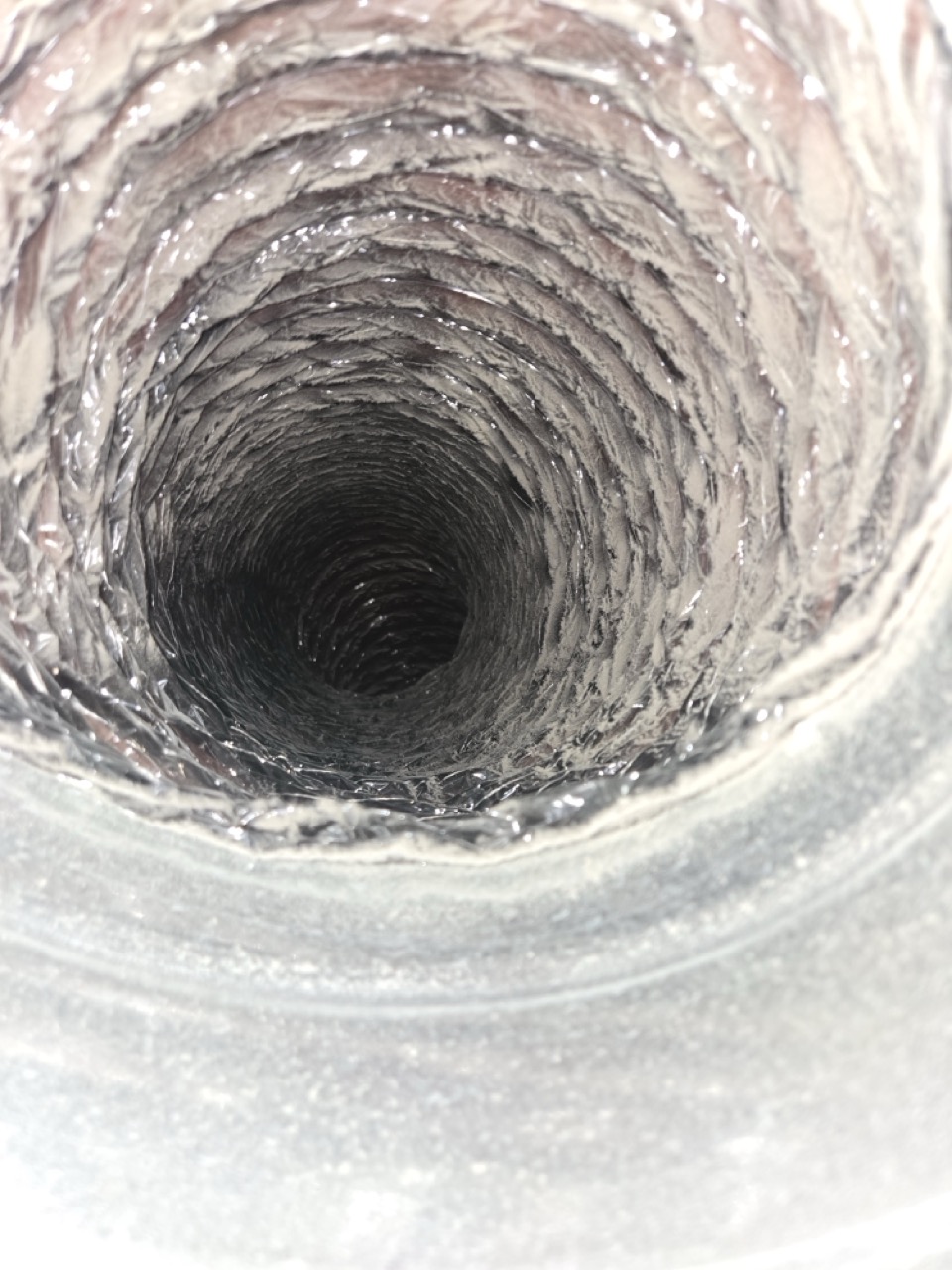
Consider a condo with an interior laundry closet. The resident cleans the lint screen after every load but notices that towels gradually take longer to dry. The short connection behind the appliance looks clear, so it is easy to assume the dryer is developing a mechanical problem. An inspection might instead reveal that the exhaust route travels vertically through concealed space before terminating outside, with lint accumulating farther along the run.
That example does not mean every slow dryer has a blocked vent. Dryer settings, load size, washer spin performance, heating components, and other appliance issues can produce similar symptoms. The practical takeaway is that looking only behind the dryer may not tell you what is happening throughout a concealed exhaust route.
Owners who want to understand the broader maintenance options available for these systems can explore Eco Duct Pros’ complete ventilation and dryer-related solutions. The company’s verified local business profile can also be used to confirm its Tampa-area business presence and service information.
Long Vent Runs and Multiple Bends Deserve Attention
Distance and routing matter because the dryer must move warm, moisture-laden exhaust through the entire duct before discharging it outdoors. A route with considerable length or multiple changes in direction creates different conditions from a short, relatively straight wall termination.
This can be especially relevant in attached properties where the laundry area was designed around the building layout rather than placed directly beside an exterior wall.
Florida’s mechanical code addresses dryer exhaust duct length and requires the equivalent length to be identified near the dryer connection when it exceeds 35 feet. The code also contains specific provisions for dryer exhaust systems in multistory structures. These are installation requirements, not proof that a particular existing vent is clogged.
For an owner, the practical question is simpler: Where does my dryer exhaust actually go?
If you do not know, check available property documents or ask building management. Understanding whether the vent exits through a wall, roof, or another approved exterior termination can make future maintenance much easier to plan. When much of the route is concealed, review professional options for evaluating difficult-to-access ventilation systems rather than trying to reach those areas with improvised equipment.
Who Is Responsible for Dryer Vent Cleaning in a Condo?
Responsibility should be confirmed rather than assumed.
A condominium association may control certain common building components, while an individual owner may be responsible for components serving the unit. Exactly where that responsibility changes depends on the property’s governing documents and how the particular vent is classified.
That distinction becomes particularly important when a dryer exhaust passes through walls, vertical chases, roof areas, or other spaces controlled by the association. Even if an owner is responsible for maintenance, access to an exterior termination or common area may require approval or coordination.
Before arranging work, review the condominium declaration, maintenance policies, and any relevant HOA requirements. If they are unclear, ask property management which portions of the dryer exhaust system the owner is permitted or required to maintain. This article provides maintenance information, not an interpretation of individual condominium documents.
Once responsibility and access are clear, owners can review Eco Duct Pros’ available dryer vent and ventilation services to determine whether professional evaluation is appropriate for the vent configuration.
What About Dryer Vents in Tampa Townhomes?
Townhomes can present a different ownership structure, but many of the physical vent-routing challenges are similar.
For example, imagine a two-story townhome with the laundry room upstairs near the center of the floor plan. The owner notices that familiar loads are taking progressively longer to dry. The visible transition duct behind the appliance is not crushed, and the lint screen is being maintained properly.
One possible explanation is restriction farther along a longer concealed exhaust route, but that is not the only possibility. The exterior termination could be obstructed, the appliance itself could have a problem, or loading and washer performance could be contributing.
The Florida Mechanical Code requires dryer exhaust to discharge outdoors and generally prohibits screens at the duct termination because they can obstruct exhaust flow. If a townhome owner cannot safely observe the exterior termination or does not know where it is located, climbing onto a roof is not an appropriate DIY inspection method.
Instead, explore professional dryer vent and exhaust-system solutions when the route extends beyond safely accessible areas.
What Warning Signs Matter More in Attached Properties?
A dryer that suddenly needs an extra cycle deserves attention, but drying time should be considered alongside other clues. Clothes remaining unusually damp, the appliance running longer than it previously did, or noticeably weak exhaust at an accessible exterior termination can indicate restricted exhaust flow. None of these symptoms proves lint buildup by itself.
The U.S. Fire Administration recommends cleaning the lint filter before and after each load and making sure the outdoor vent cover opens when the dryer operates. It also recommends having the vent system cleaned periodically by qualified professionals.
In condos and townhomes, an important complication is that the exterior termination may not be visible from the laundry room. A resident can maintain the lint screen perfectly while a restriction develops farther along a concealed route.
If familiar loads consistently take longer than expected despite proper lint-screen maintenance, explore professional dryer vent and ventilation solutions rather than assuming the appliance itself needs replacement.
Can the Dryer Be the Problem Instead of the Vent?
Yes. A slow-drying load does not automatically mean the exhaust duct needs cleaning.
The dryer may have a heating element, gas burner, moisture sensor, or other equipment problem. Oversized loads can extend drying time, and clothes entering the dryer unusually wet may point toward washer spin performance rather than the exhaust system. Incorrect cycle settings can create similar frustration.
A useful diagnostic approach is to consider what changed. If the same dryer, load size, and settings previously dried clothes normally but performance gradually declined, the exhaust route is one reasonable area to investigate. If the machine produces little or no heat, appliance diagnosis may deserve more attention.
This distinction prevents owners from paying for a service that does not address the actual problem. Review Eco Duct Pros’ broader ventilation service options when you need to determine whether the exhaust pathway should be professionally evaluated.
Why Do Roof-Exit Dryer Vents Require a Different Approach?
A roof termination changes both accessibility and maintenance planning. Owners should not climb onto a condo, townhome, or other roof simply to check whether a dryer exhaust outlet is obstructed.
Vertical routing also deserves attention because the exhaust system may extend considerably farther than the small portion visible behind the appliance. Florida’s mechanical code includes specific provisions for dryer exhaust ducts installed in vertical risers, including cleanout access requirements for certain installations. (codes.iccsafe.org)
A common mistake is assuming that cleaning the transition connection behind the dryer means the entire vent has been addressed. If the duct continues upward through concealed building space, most of the route may still be inaccessible from the laundry area.
For systems with difficult or elevated terminations, explore professional options for maintaining concealed dryer exhaust routes instead of attempting unsafe roof access.
How Does Tampa’s Climate Affect Dryer Vent Maintenance?
Tampa’s climate matters primarily at the exterior end of the system. Dryer exhaust already carries moisture from wet laundry, and the termination is exposed to outdoor weather throughout the year.
NOAA climate normals for Tampa show a warm, humid climate with substantial annual rainfall. (ncei.noaa.gov) That does not mean Tampa humidity itself clogs a dryer vent, and it should not be used as a reason to recommend unnecessary cleaning.
The more practical local concern is keeping an exterior termination functional despite exposure to weather and outdoor debris. Where the termination is safely visible from ground level, owners can observe whether its damper opens while the dryer operates. A roof termination, high exterior wall, or inaccessible common-building outlet should be left to someone with appropriate access.
Tampa condo and townhome owners who cannot safely inspect the complete route can review locally available ventilation services from Eco Duct Pros and confirm the company’s local presence through its Eco Duct Pros business profile.
What Can Condo and Townhome Owners Safely Check Themselves?
A useful inspection does not require dismantling the exhaust system.
Start by cleaning the lint screen and noticing whether normal loads are taking longer than they used to. With the dryer off, look behind the appliance if the area is safely accessible. A transition duct that is visibly crushed, sharply kinked, or compressed against the wall deserves attention because it can interfere with exhaust movement.
If the exterior termination is accessible from ground level, observe it while the dryer operates. The exhaust damper should be able to open. Do not climb onto roofs, enter restricted common areas, disconnect gas appliances, or dismantle concealed ductwork for a DIY inspection.
The U.S. Fire Administration provides additional clothes dryer fire-safety guidance for routine household maintenance.
If these basic checks do not explain a continuing performance issue, explore professional dryer exhaust evaluation options rather than attempting to reach concealed sections with household tools.
Why Should Building Access Be Confirmed Before Scheduling Service?
A condo owner may be responsible for maintaining a vent but still lack permission to access every part of it.
Exterior walls, roofs, utility areas, vertical chases, and other common spaces may be controlled by the condominium association or property management. A contractor may need building authorization, specific access arrangements, or coordination with management before reaching the termination.
Townhome rules can differ, so the same principle applies: confirm the property’s requirements before the appointment rather than discovering an access restriction after work begins.
Ask management where the dryer vent terminates, whether exterior or roof access requires approval, and whether the association has established maintenance procedures. Once those details are clear, review the relevant ventilation services available through Eco Duct Pros so the requested work matches the property’s actual vent configuration.
How Often Should a Condo or Townhome Dryer Vent Be Evaluated?
There is no single cleaning interval that fits every attached property. Vent length, number of bends, laundry frequency, duct configuration, dryer type, and exterior termination can all affect how quickly lint accumulates.
A household doing several loads each day may place very different demands on the exhaust system than a seasonal condo occupied only part of the year. Likewise, a short wall-exit duct and a long vertical route should not automatically receive identical maintenance schedules.
The U.S. Fire Administration recommends having dryer vents cleaned periodically by qualified professionals and keeping the area around the dryer free of combustible materials. (usfa.fema.gov) Rather than relying solely on a calendar, owners should also pay attention to changes in normal dryer performance.
If you are unsure what schedule makes sense for your particular configuration, explore Eco Duct Pros’ dryer vent and ventilation maintenance options and base the decision on the actual exhaust route and its condition.
Can Multiple Units Share the Same Dryer Exhaust Duct?
Owners should never assume their dryer shares an exhaust system with neighboring units simply because they live in a multifamily building.
The Florida Mechanical Code generally requires clothes-dryer exhaust systems to be independent of other systems and convey moisture and combustion products outdoors. It also contains specific provisions for certain common multistory dryer exhaust systems. (codes.iccsafe.org)
The exact configuration therefore needs to be established from the building design rather than guessed from the location of the laundry room.
Property management, association records, building plans, or a qualified inspection may help identify how the exhaust is routed. This is particularly useful before cleaning because the correct approach depends on whether the system serves one appliance and where accessible cleanout points are located.
For an exhaust configuration that cannot be determined from the unit itself, review professional dryer vent and ventilation evaluation options before attempting DIY cleaning.
What Should You Know About the Transition Duct Behind the Dryer?
The short section connecting the dryer to the permanent exhaust duct deserves attention because it can be compressed when an appliance is pushed too close to the wall.
A visibly crushed or sharply kinked connection can restrict exhaust movement even when the concealed portion of the system is relatively clear. This is particularly easy to overlook in compact condo laundry closets where there is little clearance behind the appliance.
The U.S. Fire Administration recommends using rigid or flexible metal venting and advises against plastic or foil accordion-style ducting. (usfa.fema.gov)
Owners can visually check an accessible connection with the appliance off, but moving a heavy dryer or disconnecting a gas appliance creates additional risks. If access requires appliance movement or the restriction appears to continue into concealed ductwork, explore professional ventilation maintenance solutions instead of dismantling the installation yourself.
What Should Property Managers Consider for Multiple Dryer Vents?
Managing several units changes the maintenance challenge. Individual residents may notice performance changes inside their own units, while exterior terminations, roof access, vertical chases, or other building areas may fall under centralized management.
A practical maintenance plan begins with understanding the building’s dryer exhaust layout. Property managers should know where individual systems terminate, which areas require controlled access, and whether specific cleanouts or maintenance points are incorporated into the system.
Documentation can also help avoid confusion when ownership changes or new residents move in. Recording maintenance according to the property’s actual system design is more useful than assuming every unit has an identical vent route.
For properties requiring coordinated attention across multiple units, explore Eco Duct Pros’ complete ventilation service options and use the Eco Duct Pros business profile to verify local business and service information.
What Should Owners Do Before Scheduling Dryer Vent Cleaning?
Start by gathering information about the exhaust system rather than simply booking a generic cleaning.
Ask where the vent terminates and whether the route travels horizontally, vertically, or through common building space. Check whether exterior or roof access requires association approval. If building management maintains part of the system, confirm where the owner’s responsibility ends.
It is also useful to describe the actual symptom. Longer drying times, weak exhaust, a damaged transition connection, or routine preventive maintenance provide different starting points for an evaluation. If the dryer is not producing heat at all, appliance repair may deserve consideration before assuming the vent is responsible.
This preparation helps the service provider understand the property before work begins and can prevent access problems on appointment day. Tampa condo and townhome owners can review Eco Duct Pros’ available dryer vent and ventilation solutions, confirm the company’s Tampa-area business presence, and request an evaluation based on the property’s specific exhaust configuration.
A Better Approach to Dryer Vent Maintenance in Attached Homes
For condo and townhome owners, the most useful takeaway is simple: know the exhaust route before deciding how it should be maintained.
A longer drying cycle may justify investigating the vent, but it does not prove a blockage. A clean lint screen does not establish that a concealed duct is clear. And responsibility for maintaining the exhaust route should not be assumed when portions of the system pass through association-controlled spaces.
Start with safe observations, confirm the building’s access and maintenance requirements, and have inaccessible sections evaluated when the evidence points toward an exhaust problem. This approach addresses the actual configuration rather than treating every dryer installation the same.
For a broader understanding of available maintenance options, explore Eco Duct Pros’ complete dryer vent and ventilation solutions. You can also verify Eco Duct Pros’ local business presence and service information or schedule a professional dryer vent evaluation for your Tampa property.
Frequently Asked Questions
How can I tell if my condo dryer vent may be restricted?
Pay attention to changes from the dryer’s normal performance. Familiar loads consistently taking longer to dry, clothes remaining damp after a normal cycle, or weak exhaust at a safely accessible exterior termination can justify further investigation. These symptoms do not prove lint buildup because dryer components, load size, washer spin performance, and settings can produce similar problems. If basic checks do not identify the cause, explore professional dryer vent and ventilation evaluation options for inaccessible portions of the exhaust route.
Who is responsible for dryer vent cleaning in a condominium?
Responsibility depends on the condominium’s governing documents and the way the exhaust system is classified. An owner may maintain components serving the individual unit while an association controls roofs, exterior walls, vertical chases, or other common areas. Do not assume responsibility based solely on where the dryer is located. Review your declaration and maintenance policies, then confirm requirements with property management before arranging access. Once responsibilities are clear, review Eco Duct Pros’ available dryer vent solutions to determine what type of service fits the property’s configuration.
Can a condo dryer vent terminate on the roof?
Some dryer exhaust systems can be routed vertically to an approved outdoor termination, depending on the building design and applicable requirements. For owners, the main concern is accessibility. A roof termination should not become a DIY inspection project, particularly on a multifamily building where roof access may be restricted. Building management may also need to coordinate access. If your dryer exhaust terminates somewhere you cannot safely reach, request a professional evaluation of the vent configuration instead of climbing onto the roof.
Why does my townhome dryer take longer to dry clothes?
Restricted exhaust is one possibility, especially when the vent has a long route or several bends, but it is not the only explanation. Overloading, very wet clothes leaving the washer, incorrect settings, a crushed transition duct, heating problems, or moisture-sensor issues may also increase drying time. Compare current performance with what is normal for the same appliance and similar loads. If the change persists and accessible checks do not reveal the cause, explore professional ventilation and dryer exhaust services before assuming either the appliance or ductwork is responsible.
Can I clean a long condo dryer vent myself?
Cleaning the lint screen and visually checking an accessible transition connection are reasonable homeowner tasks. A long concealed exhaust route is different. Improvised brushes or tools may not reach the entire system, and roof or common-area access can introduce safety and property-management concerns. Moving a gas dryer can also involve risks that go beyond routine homeowner maintenance. For long, vertical, or otherwise inaccessible routes, explore professional options for maintaining dryer exhaust systems rather than attempting to access concealed sections yourself.
How often should dryer vents in condos and townhomes be cleaned?
There is no single interval that fits every property. Laundry volume, vent length, bends, system design, appliance performance, and the amount of lint reaching the exhaust can all influence maintenance needs. The U.S. Fire Administration recommends periodic professional cleaning rather than giving one universal schedule for every installation. (usfa.fema.gov) Owners should also respond to meaningful performance changes instead of waiting for an arbitrary date. Review dryer vent maintenance options for your particular system if its history is unknown.
What should I ask my condo association before scheduling service?
Ask where your dryer exhaust terminates, whether any portion passes through common building space, who is responsible for maintenance, and whether roof or exterior access requires authorization. It is also useful to ask whether the association maintains records or has established procedures for dryer vent work. Having this information available can make an evaluation more efficient and reduce access problems. After confirming the building requirements, schedule an evaluation based on your condo’s actual vent configuration.
Is cleaning the lint screen enough to keep the entire dryer vent clear?
No. Cleaning the lint screen is essential routine maintenance, but it does not allow you to see or clean the entire exhaust route. Some lint can travel beyond the filter and accumulate farther downstream. Transition ducts, bends, long runs, and exterior terminations can also develop restrictions unrelated to the visible lint screen. The U.S. Fire Administration recommends cleaning the filter before and after each load as well as periodic professional vent cleaning. (usfa.fema.gov) For inaccessible sections, explore professional dryer exhaust maintenance solutions.
Does Tampa’s humidity mean my dryer vent needs more frequent cleaning?
Not automatically. Tampa’s climate alone does not establish how often a particular dryer vent should be cleaned. Vent configuration, laundry frequency, lint accumulation, appliance operation, and exterior termination condition are more useful factors when deciding on maintenance. Local weather can matter at an outdoor termination, particularly because that component remains exposed to the environment. If your system has an inaccessible exterior or roof termination, request a professional dryer vent evaluation in Tampa instead of choosing a cleaning schedule based only on climate.
What should I do if I do not know where my dryer vent terminates?
Start with your condominium association, HOA, property manager, building plans, or available maintenance documentation. Do not assume the vent exits directly behind the laundry room because attached properties can have longer or vertical exhaust routes. Knowing the termination location also helps determine whether special building access is necessary. If the route still cannot be established safely, explore Eco Duct Pros’ dryer vent and ventilation solutions, verify local business information through the Eco Duct Pros profile, and request help evaluating your property’s exhaust system.
For help evaluating a condo or townhome dryer exhaust system in Tampa, schedule a dryer vent consultation with Eco Duct Pros.


