
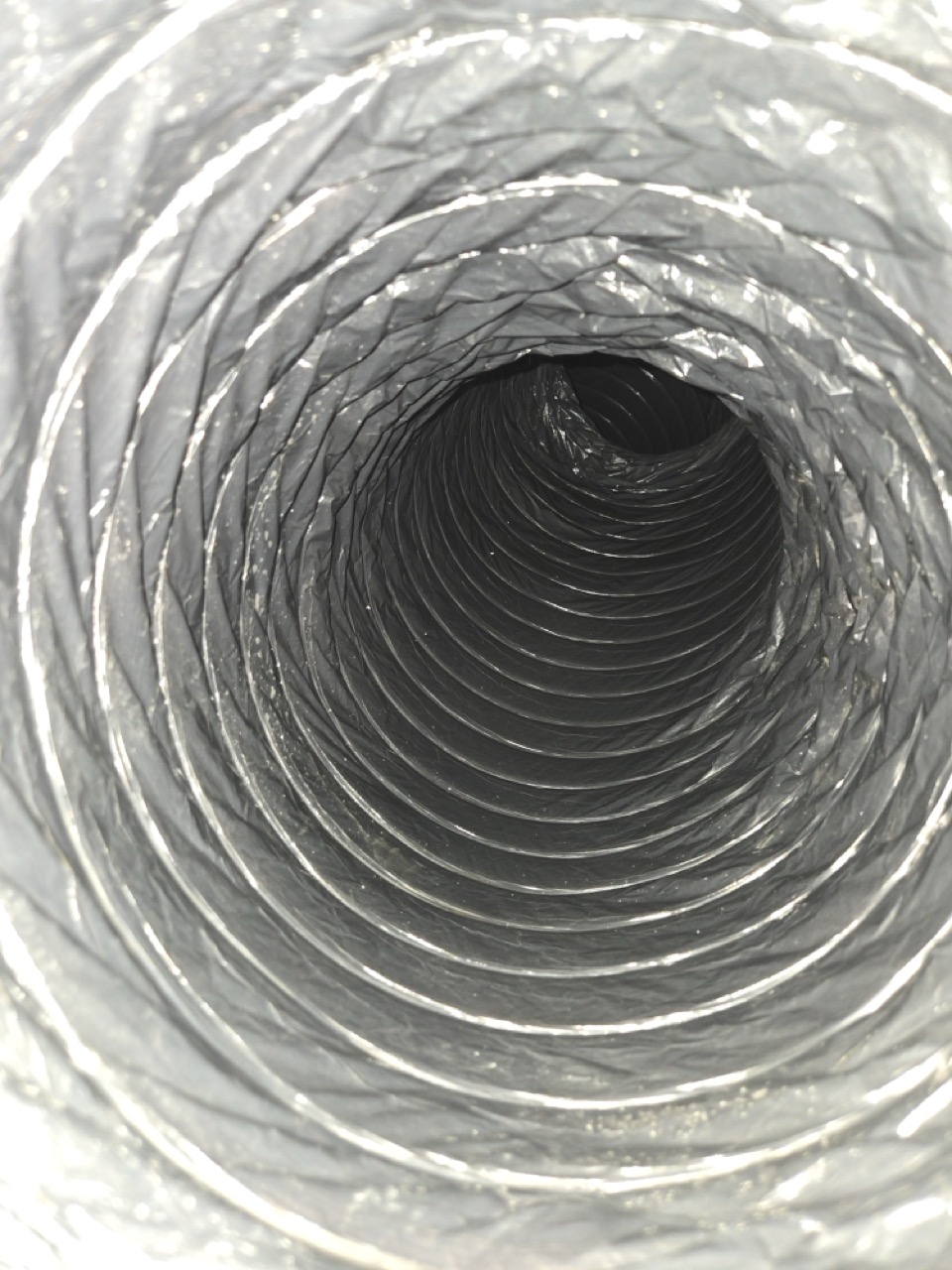
A long dryer vent run can make it harder for a dryer to move warm, moisture-laden air from the appliance to the exterior of a Tampa home. The challenge becomes greater when the route includes multiple elbows, vertical sections, or other changes in direction. These features add resistance to airflow and can create more opportunities for lint to collect.
That does not mean every long dryer vent is improperly installed or needs immediate cleaning. The dryer manufacturer’s requirements, duct material, equivalent length, number of fittings, exterior termination, and current condition all matter. Florida’s mechanical code addresses these factors and provides specific requirements for dryer exhaust duct length and fittings.
If your laundry room is located far from an exterior wall and you are unsure how the exhaust is routed, explore professional dryer vent and ventilation services before assuming that a slow dryer is simply an appliance problem.
Why Does Dryer Vent Length Affect Airflow?
A clothes dryer needs to push exhaust through the entire duct route and discharge it outdoors. A short, relatively straight path generally creates less airflow resistance than a long route containing several turns.
Manufacturer guidance supports this principle. Whirlpool recommends keeping dryer venting as short and straight as possible because increased length and elbows can reduce airflow and encourage lint buildup.
Consider a Tampa home with an interior laundry room positioned near the center of the floor plan. The dryer may be only a few feet from the wall behind it, but the permanent exhaust duct could travel through the ceiling and across a substantial portion of the house before reaching an exterior termination.
From the laundry room, the system may appear simple. The concealed route tells a different story.
If drying performance has changed and much of the exhaust route is inaccessible, review professional dryer vent service options rather than trying to evaluate the entire run from behind the appliance.
Why Do Elbows Matter as Much as the Actual Distance?
The physical distance from the dryer to the exterior is only part of the calculation.
Every elbow changes the direction of airflow. Because fittings create resistance, building codes can account for them through equivalent length, meaning a vent’s effective length can be greater than its straight-line measurement.
Under the Florida Mechanical Code provision reviewed for this article, the specified maximum exhaust duct length is 35 feet, with reductions based on fittings. For example, the listed equivalent length of a 4-inch-radius mitered 90-degree elbow is 5 feet. The code also allows maximum length to be determined through dryer manufacturer instructions under specified conditions.
This is why homeowners should not measure only the visible distance between their laundry room and an exterior wall and assume they know the vent length.
For homes where the duct makes several concealed turns, explore dryer vent and ventilation solutions based on the actual exhaust configuration.
What Happens When Lint Builds Up in a Long Vent Route?
The lint screen captures a significant amount of lint, but it does not mean the entire exhaust path will remain free of accumulation indefinitely.
A long duct provides more surface area and may contain several fittings where airflow conditions change. If the system becomes restricted, the dryer has a harder time exhausting air efficiently. Manufacturer guidance identifies increased vent length and elbows as factors that can reduce airflow and encourage lint buildup.
Imagine a household where the same loads previously dried in one normal cycle but gradually begin needing additional time. The dryer still produces heat, and the lint screen is cleaned regularly. An inspection might find lint accumulation farther down a long exhaust route.
It could also reveal something different, such as a crushed transition duct or an obstructed exterior termination. That is why longer drying time should be treated as a symptom requiring investigation, not automatic proof that the vent needs cleaning.
If a restriction is suspected beyond the visible connection, review professional dryer vent maintenance options and confirm local service information through the Eco Duct Pros business profile.
Does a Long Dryer Vent Automatically Mean the Installation Is Wrong?
No. Length by itself does not establish that a dryer exhaust system is improperly installed.
The correct maximum can depend on the appliance manufacturer’s installation instructions, fittings, system design, and applicable code requirements. The Florida Mechanical Code includes methods for determining maximum allowable dryer exhaust duct length and requires length identification in certain installations where equivalent length exceeds 35 feet.
A properly designed longer route can therefore be very different from an exhaust system that was extended without considering the dryer’s requirements or the effect of multiple bends.
Homeowners should also avoid making unverified modifications such as adding a generic fan to compensate for poor performance. Dryer exhaust duct power ventilators are subject to specific listing and installation requirements under the Florida Mechanical Code.
If you do not know whether your home’s exhaust route matches the dryer and system design, explore professional ventilation service options before making changes to the ductwork.
How Can You Tell If a Long Dryer Vent Is Becoming Restricted?
Changes in normal drying performance can provide useful clues. Clothes that remain warm but damp after a normal cycle, increasingly long drying times, or weak airflow at a safely accessible exterior termination may point toward restricted exhaust flow.
Some modern dryers may also display an airflow or “Check Vent” warning. Whirlpool notes that these warnings can be associated with clogged venting, crushed or kinked ducts, or excessive turns.
Still, these symptoms do not prove that lint inside a long vent is the cause. Large loads, wet clothes coming from the washer, incorrect settings, dirty moisture sensors, or appliance problems can also affect drying.
If performance has gradually changed and the concealed exhaust route cannot be inspected safely, explore professional dryer vent maintenance options rather than assuming the appliance needs replacement.
Can a Clean Lint Screen Mean the Entire Vent Is Clear?
No. The lint screen and the home’s exhaust duct perform different jobs.
Cleaning the lint screen regularly is essential, but some lint can still move beyond the filter. A long exhaust route gives that material a greater distance to travel before reaching the outdoors. Bends, restrictions, or other problem areas along the route may further affect airflow.
Consider a household that cleans the lint screen after every load but still experiences gradually increasing drying times. The visible area behind the dryer may look clean. An inspection farther along the exhaust route could reveal lint accumulation, a partially obstructed termination, or a duct configuration that is restricting airflow.
Manufacturer guidance recommends checking the entire vent route and exterior hood when drying performance declines.
When the majority of the vent is concealed inside walls or ceilings, review professional dryer vent and ventilation services instead of relying only on the condition of the lint screen.
Why Is the Exterior Dryer Vent Termination Important?
A long vent can be clean internally and still perform poorly if the termination is obstructed.
Dryer exhaust needs a clear path outdoors. The Florida Mechanical Code requires clothes-dryer exhaust ducts to terminate outside and specifies a backdraft damper while prohibiting screens at the termination.
Outdoor debris or other obstructions can interfere with the termination. Whirlpool also advises checking that the exterior exhaust hood is not blocked and that its flap can move properly.
Homeowners can observe an easily accessible termination from ground level while the dryer operates, but elevated wall or roof terminations should not become DIY inspection projects.
If the outlet is inaccessible or airflow appears unusually weak, explore dryer vent service options for difficult-to-access exhaust routes.
What If the Dryer Vent Travels Upward Through the Home?
Vertical routing can create additional maintenance considerations, particularly when the duct extends through more than one level before reaching an exterior termination.
A vertical vent is not automatically defective. The system still needs to comply with applicable installation requirements and the dryer’s specifications. Florida’s mechanical code specifically requires each vertical dryer exhaust riser to have a means for cleanout.
Imagine a two-story Tampa home with an upstairs laundry room. The exhaust may rise farther before reaching its termination, and most of that route may be concealed. Looking behind the dryer would reveal only a small portion of the complete system.
This is why knowing the vent route is useful. Homeowners should not attempt to access roofs, concealed chases, or other unsafe areas simply to inspect the termination.
For vertical or otherwise difficult exhaust configurations, review professional dryer vent and ventilation solutions based on the actual system design.
Can a Long Vent Make a Dryer Work Harder?
Restricted airflow can affect drying performance because moist exhaust needs to leave the appliance efficiently.
Whirlpool states that increased vent length and elbows can reduce airflow and that vent systems exceeding specified requirements can result in longer drying times and increased energy use.
That does not mean every long vent causes excessive energy consumption. A properly designed and unobstructed system can behave very differently from one that is kinked, poorly routed, or partially blocked.
Homeowners should therefore avoid assuming that buying a new dryer will automatically solve persistent long drying times. If the house exhaust remains restricted, the underlying airflow issue may still exist after appliance replacement.
Before replacing an otherwise functioning appliance because loads take longer to dry, explore professional dryer exhaust evaluation options to determine whether the home’s vent route may be contributing.
What Role Does the Transition Duct Behind the Dryer Play?
Even a well-designed permanent vent can develop airflow problems if the short connection behind the dryer is crushed or kinked.
This often happens when the appliance is pushed too close to the wall. Whirlpool recommends rigid or flexible metal venting and warns that crushed vent material can interfere with airflow.
Florida’s mechanical code also distinguishes the transition duct from the permanent exhaust system. Under the cited code edition, transition ducts are limited to a single listed and labeled length no greater than 8 feet and cannot be concealed within construction.
With the appliance turned off, homeowners can visually inspect an easily accessible connection without dismantling the system. Avoid moving heavy appliances or disconnecting gas equipment if doing so cannot be accomplished safely.
If the visible connection appears normal but drying problems continue, review professional dryer vent maintenance services for the remaining exhaust route.
Why Should Tampa Homeowners Know Their Dryer Vent Route?
Knowing the route helps homeowners understand what they are actually maintaining.
A dryer located against an exterior wall may have a relatively straightforward exhaust path. An interior laundry room could require ductwork to travel through walls, ceilings, or another level before reaching outdoors. Two Tampa homes with nearly identical dryers can therefore have very different exhaust configurations.
Knowing where the vent terminates, approximately how it travels through the home, and whether it contains several bends can make future troubleshooting more informed.
It also prevents unsafe assumptions. If the termination is on a roof, homeowners should not climb up simply to inspect it. If much of the system is concealed, professional evaluation may be more appropriate.
For help with a long or difficult-to-access dryer exhaust route, explore Eco Duct Pros’ ventilation services and confirm local business information through the Eco Duct Pros profile.
Can Dryer Vent Cleaning Fix Problems Caused by a Long Vent Run?
Cleaning can help when lint or debris is restricting an otherwise properly designed dryer exhaust system. It cannot correct every problem associated with a long vent route.
If the duct is excessively long for the appliance, contains unnecessary bends, is damaged, has an unsuitable transition connection, or was installed incorrectly, removing lint will not change those underlying conditions. The system may require evaluation of its configuration rather than repeated cleaning.
This distinction is important because a homeowner may notice better performance immediately after cleaning but experience the same problem again if another restriction remains.
A useful service should therefore consider both cleanliness and configuration. If your dryer vent is difficult to access or performance problems continue after basic maintenance, explore professional dryer vent and ventilation services to determine what the exhaust system actually needs.
Should You Use a Dryer Vent Booster Fan on a Long Run?
A booster fan should not be treated as a universal DIY solution for a long dryer vent.
The Florida Mechanical Code includes provisions for dryer exhaust duct power ventilators. These devices must meet specific listing requirements and be installed according to the manufacturer’s instructions. (codes.iccsafe.org)
Adding an unapproved fan to compensate for poor airflow could leave the underlying issue unresolved. A restriction may instead be caused by lint accumulation, excessive fittings, a crushed connection, an obstructed termination, or another installation problem.
The dryer manufacturer’s requirements should also be considered before modifying the exhaust system.
If a long vent appears to need mechanical assistance, review professional ventilation service options before adding equipment to the exhaust route.
What Can Homeowners Safely Check Before Scheduling Service?
Start with the parts of the system you can inspect without dismantling equipment or entering unsafe areas.
Clean the lint screen and observe whether familiar loads are taking noticeably longer than they used to. With the dryer turned off, inspect the accessible transition connection for obvious crushing or sharp kinks. If the exterior termination can be viewed safely from ground level, check whether its damper opens while the dryer operates.
The U.S. Fire Administration recommends cleaning the lint filter before and after each load and checking that the outdoor vent covering opens during dryer operation.
Do not climb onto a roof, dismantle concealed ductwork, or disconnect gas equipment simply to investigate a long vent.
When the accessible areas look normal but performance problems remain, explore professional dryer vent maintenance options for the concealed portion of the system.
When Should a Long Dryer Vent Be Professionally Evaluated?
Professional evaluation becomes more useful when a significant portion of the vent cannot be safely accessed or when normal dryer performance has changed without an obvious explanation.
Repeatedly needing extra drying time, airflow warnings from the appliance, weak exhaust at an accessible termination, or a history of unknown vent maintenance can provide reasons to investigate further. A complicated route with multiple bends or vertical sections may also make DIY evaluation incomplete.
The purpose should be to determine what is actually happening inside the exhaust system, not to assume that every long vent is blocked.
A professional evaluation may identify lint accumulation, a crushed connection, an obstructed termination, or another airflow issue. It may also find that the exhaust route is reasonably clear and that appliance diagnosis deserves more attention.
For Tampa homeowners dealing with persistent dryer performance concerns, review available dryer vent and ventilation services based on the actual symptoms and vent configuration.
How Can You Reduce Problems With a Long Dryer Vent?
Routine habits can help even when the permanent exhaust route cannot easily be changed.
Clean the lint filter consistently. Avoid routinely overloading the dryer. Pay attention when familiar loads begin taking longer than normal, rather than waiting until performance becomes significantly worse.
Keep the accessible transition duct from becoming crushed when repositioning the dryer. Where the exterior termination can be safely observed, make sure it is not visibly obstructed and that its damper can operate.
Maintenance should also reflect the actual system. A long route with several elbows may deserve different attention from a short, direct wall exit, but there is no reason to assume every longer system needs the same cleaning schedule.
For help maintaining an exhaust route that extends through concealed areas of the home, explore Eco Duct Pros’ dryer vent and ventilation solutions and verify local business information through the Eco Duct Pros profile.
What Should Tampa Homeowners Do About a Long Dryer Vent Run?
Start by understanding the route before assuming the vent needs cleaning or modification.
Find out where the exhaust terminates, whether it travels vertically or horizontally, and whether multiple elbows are involved. Check the accessible transition connection and exterior termination when they can be reached safely. Compare current drying performance with what is normal for the appliance and similar laundry loads.
If the dryer suddenly stops heating, appliance service may be more relevant. If drying time has gradually increased while the dryer still produces heat, evaluating the exhaust system may be a reasonable next step.
Cleaning can address lint-related restrictions, but it cannot correct every design or installation problem. Long-term performance depends on the condition and configuration of the complete exhaust route.
Tampa homeowners can explore Eco Duct Pros’ dryer vent and ventilation services, confirm local business information through the Eco Duct Pros profile, or schedule a professional dryer vent evaluation when a long or concealed exhaust route needs closer attention.
Frequently Asked Questions
What is considered a long dryer vent run?
There is no single distance that defines a long dryer vent in every installation. The effective length depends on the straight duct distance, number and type of elbows, dryer manufacturer’s requirements, and applicable building code. A vent can have a relatively short physical distance but a greater equivalent length because several bends add resistance to airflow.
Do longer dryer vents collect more lint?
Longer routes can provide more surface area where lint may accumulate, particularly when the system contains multiple bends or airflow is restricted. However, length alone does not prove that a vent is clogged. Duct material, installation quality, termination condition, dryer usage, and maintenance can all influence how the system performs.
Can a long dryer vent cause clothes to take longer to dry?
It can contribute to longer drying times if the route restricts airflow or has accumulated lint. However, long drying times can also result from oversized loads, clothes leaving the washer excessively wet, incorrect dryer settings, heating problems, moisture-sensor issues, or a crushed transition duct. The complete system should be considered before assuming the long vent is responsible.
Are multiple elbows bad for a dryer vent?
Elbows are sometimes necessary to route dryer exhaust outdoors, but each change in direction adds resistance. This is why building codes and manufacturer instructions consider fittings when determining allowable vent length. Several unnecessary bends can make the exhaust route less efficient, especially when combined with a long duct or other restrictions.
Can I clean a long dryer vent myself?
Cleaning the lint screen and visually checking an accessible transition connection are reasonable homeowner maintenance tasks. Cleaning a long concealed route can be more difficult because household tools may not reach the complete system. Avoid climbing onto roofs, dismantling concealed ducts, or disconnecting gas appliances. Professional service may be more appropriate when much of the exhaust route is inaccessible.
Does a long dryer vent need to be cleaned more often?
Not necessarily. There is no universal cleaning schedule based only on vent length. Laundry frequency, number of bends, airflow, duct configuration, exterior termination, and actual lint accumulation should also be considered. Changes in normal dryer performance can provide useful information when deciding whether the system needs evaluation.
Can I install a booster fan for a long dryer vent?
A booster fan should not be added simply because the exhaust route appears long. Dryer exhaust duct power ventilators are subject to specific installation and listing requirements, and the dryer manufacturer’s instructions also matter. Before adding equipment, the existing system should be checked for lint buildup, crushed ductwork, excessive bends, termination problems, or other restrictions.
Why is my dryer vent routed through the roof?
The laundry room’s location and the home’s design can influence where the exhaust terminates. An interior or upper-floor laundry room may require a vertical route to reach outdoors. A roof termination is not automatically a problem, but it can make inspection and maintenance less accessible. Homeowners should avoid climbing onto the roof to perform routine vent checks themselves.
Will buying a new dryer fix problems caused by a long vent?
Not if the home’s exhaust system is the underlying problem. A new dryer still needs to move exhaust through the same duct route. If that route is restricted by lint, a crushed connection, an obstructed termination, or another airflow problem, replacing the appliance alone may not correct the issue. Appliance performance and exhaust condition should be considered separately.
How do I know if my long dryer vent needs professional attention?
Consider professional evaluation when familiar loads consistently take longer to dry, the dryer reports an airflow warning, exhaust appears weak at an accessible termination, or most of the vent route is concealed and its maintenance history is unknown. These signs do not automatically prove a blockage, but they provide reasonable grounds for investigating the complete exhaust system.
For help evaluating a long or difficult-to-access dryer exhaust route in Tampa, schedule a professional consultation with Eco Duct Pros.


